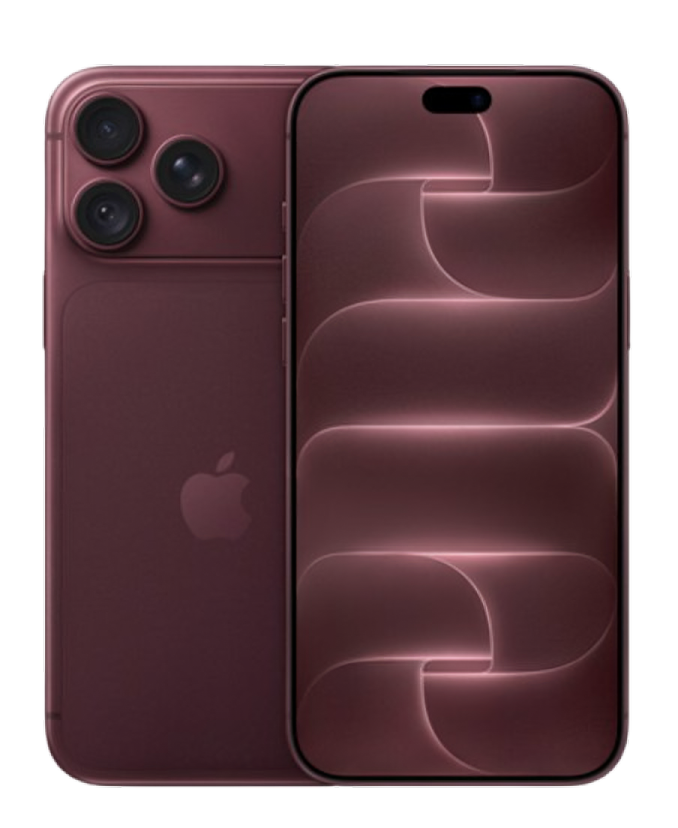
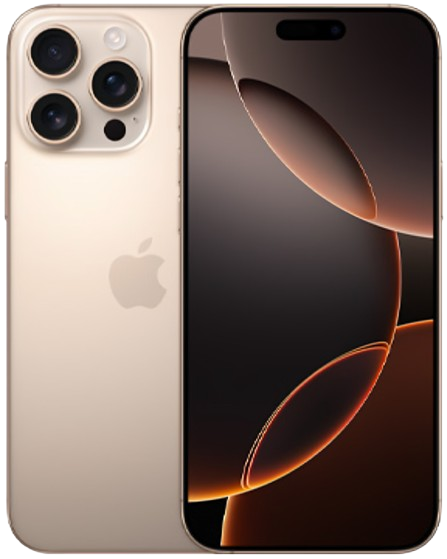
iPhone 16 Pro Max Review: Thermal Refinement Meets a Giant Viewport
Mobitech
Senior Hardware Reviewer
"The iPhone 16 Pro Max targets power users and mobile videographers seeking maximum endurance, class-leading video production tools, and expansive screen real estate. Key hardware advances include a re-engineered graphite thermal architecture, thinner display borders, and a versatile 48MP ultrawide sensor. However, slow wired charging speeds, significant camera-island desk wobble, and an over-sensitive Camera Control button keep it from outright perfection."
Executive Overview & Context
Positioned at the apex of Apple’s consumer lineup, the iPhone 16 Pro Max commands a steep ultra-flagship entry price ($1,199 / £1,199 / ₹1,44,900 for 256GB baseline storage, scaling up to 1TB). It is targeted squarely at high-throughput creators, enterprise power users, and mobile gaming enthusiasts who prioritize sustained computing efficiency and battery longevity over pocket portability.
The retail unboxing experience remains stripped to the bare essentials:
iPhone 16 Pro Max running iOS 18
1-meter braided USB-C to USB-C cable (rated strictly for USB 2.0 throughput out of the box; USB 3.2 Gen 2 transfer cables must be purchased separately)
SIM ejector tool (non-US models only; US models are eSIM-exclusive)
Minimal regulatory paper documentation
No modular charging brick, no protective case, and no pre-applied display screen protector.
Design, Ergonomics, and Build Quality
The chassis retains Grade 5 Titanium over an internal aluminum substructure, but Apple has shifted to a finer micro-blasted satin finish that exhibits far less oleophobic smudging than early brushed-titanium treatments. By shrinking perimeter bezels down to roughly 1.15mm, the display expands to 6.9 inches while keeping footprint growth minimal (163 x 77.6 x 8.25 mm).
At 227 grams, the phone is marginally heavier than its direct predecessor (+6g), but the center of gravity is anchored low. The subtle perimeter chamfering mitigates palm fatigue during single-handed use, though the sheer width still demands two-handed operation for upper-quadrant reach.
The massive triple-lens camera housing protrudes 4.3mm from the rear backplate. Placed flat on a bare desk, typing on the lower-left or upper-left keys induces severe wobble unless neutralized by a leveling case.
Full IP68 certification is rated for submersion up to a class-leading 6 meters for 30 minutes, exceeding standard 1.5-meter lab thresholds.
Positioned on the lower right flank, this capacitive-force sapphire switch enables mechanical shutter actuation and swipe-based EV/zoom adjustments. In practice, its firm mechanical actuation force introduces subtle micro-shake when shooting one-handed, making two-handed landscape shooting mandatory for sharp results.
Display Real-World Assessment
The 6.9-inch Super Retina XDR OLED panel (2868 x 1320 resolution at 460 ppi) sets an exceptional standard for color consistency and visual fidelity.
The panel reaches its advertised 1,000 nits typical luminance under manual control, spiking to 1,780–1,980 nits under high ambient outdoor lighting (100% APL). Peak HDR highlights comfortably hit the 2,000-nit threshold when rendering Dolby Vision masters.
Minimum brightness drops cleanly to 1 nit in pitch-black conditions, eliminating eye strain during nocturnal reading.
Ambient reflectance hovers around 4.4%. While manageable, it trails the deep anti-reflective multi-layer coating of Samsung’s Gorilla Armor, leaving direct sun reflections visible under harsh daylight.
Delta-E color variance measures well below 1.2 across sRGB and Display P3 profiles, delivering reference-grade neutrality without oversaturating foliage or flesh tones.
The ProMotion controller throttles dynamically between 120Hz for fluid gestures and drops reliably to 1Hz for static elements and the Always-On Display.
Performance, Sustained Load, and Software
Powering the device is the A18 Pro SoC, fabricated on TSMC’s second-generation 3nm node (N3E). The silicon integrates a 6-core CPU (2 performance cores clocked at 4.04 GHz, 4 efficiency cores), a 6-core GPU with hardware-accelerated ray tracing, and a 16-core Neural Engine yielding 35 TOPS.
Apple redesigned the internal chassis around an aluminum thermal substation bonded to a graphite diffusion sheet. Under prolonged 20-minute 3DMark Wild Life Extreme stress testing, the phone maintains 72% to 76% stability—a measurable leap over the 15 Pro Max, which frequently choked down to 60–63% due to localized heat concentration.
The jump to 8GB of high-speed LPDDR5X RAM allows up to 18 active background applications to remain frozen in state without triggering cold reloads, providing adequate headroom for on-device machine-learning models.
Launching with iOS 18, the phone benefits from Apple's gold-standard software lifecycle, guaranteeing at least 5 to 7 years of full feature and security patches.
Camera Performance Deep Dive
The imaging pipeline centers on a flexible triple-sensor array engineered for zero shutter lag and uncompressed data capture.
Primary Sensor: Default 24MP HEIF/JPEG binned output delivers immaculate micro-contrast and fine detail rendering without excessive artificial edge-sharpening halos. Dynamic range is vast, recovering shadowed foregrounds without blowing out specular cloud highlights. The new Photographic Styles engine operates in real-time color space, letting you adjust skin-tone undertones and color palettes losslessly before capture.
Moving from a 12MP to a high-density 48MP sensor resolves edge softness that plagued earlier models. Macro shots now retain tack-sharp focus and resolve fine textures on fabric or botanical subjects down to 2cm.
5x Telephoto Reach: The 120mm folded tetraprism provides crisp optical output at 5x. However, the lack of an intermediate 3x dedicated optical lens leaves 70mm–110mm shots relying on digital crop-zooms from the 48MP main sensor, causing a minor drop in resolving power across mid-range focal lengths.
The undisputed benchmark for mobile videography. The camera captures 4K video at 120 fps in Dolby Vision, SDR, and 10-bit Log directly to internal storage or an external SSD via USB 3.2 Gen 2. The four-microphone spatial array includes studio-grade wind-noise cancellation, and the software-side "Audio Mix" accurately separates background ambience from in-frame spoken dialogue.
12MP TrueDepth module with autofocus tracks faces reliably, retaining true-to-life skin texture and exposure balance in mixed backlight situations.
Battery Endurance & Charging Realities
Battery capacity steps up to 4,685 mAh, which—paired with the power efficiency of the N3E silicon—delivers stellar runtimes.
Real-World Screen-On Time (SoT): In real-world mixed testing (5G data, high-nit outdoor web browsing, 4K video playback, and social feeds), the device routinely posts 9.5 to 11 hours of active SoT, safely yielding two full days of conservative use.
While the phone can negotiate transient power peaks up to 38W when paired with high-wattage USB-PD PPS chargers, sustained absorption settles near 27W.
15 Minutes: 29%
30 Minutes: 54%
0 to 100% Full Charge: 1 hour 48 minutes (prolonged trickle-charge phase above 80% to protect cell health)
MagSafe supports up to 25W using Apple’s updated puck paired with a 30W adapter, reaching 50% in roughly 30 minutes. Standard Qi2 charging remains capped at 15W.
What We Liked (Pros)
- • Class-Leading Video Engine: Flawless 4K 120 fps capture in 10-bit Log with direct offload to external NVMe SSDs via USB 3.2.
- • Phenomenal Battery Endurance: Over 10 hours of real-world screen-on-time easily outlasts primary flagship rivals under mixed workloads.
- • Upgraded 48MP Ultrawide: Resolves fine details cleanly, eliminating perimeter distortion and noticeably elevating macro photography.
- • Improved Thermal Dissipation: Redesigned graphite subsystem provides significantly higher sustained frame rates during heavy computing and gaming tasks.
- • Flagship Display Calibration: Superb factory color tuning paired with ultra-thin, uniform bezels across a massive 6.9-inch canvas.
Room for Improvement (Cons)
- • Sluggish Wired Charging Curve: Requiring nearly 110 minutes for a complete top-up lags significantly behind contemporary flagship fast-charging standards.
- • Camera Control Ergonomics: The shutter button's stiff tactile switch requires excessive pressure, often inducing blur during one-handed photography.
- • Noticeable Mid-Range Zoom Gap: Absence of a dedicated 3x optical module leaves 70–110mm shots relying on hybrid digital cropping.
- • Desk Stability Deficit: The asymmetrical camera cluster creates excessive wobble when interacting with the display on a flat surface without a case.
Final Editorial Rating
Our comprehensive hardware score considering design, display, cameras, and performance.
The iPhone 16 Pro Max is the premier choice for serious content creators, videographers, and demanding power users who want unrivaled battery life, robust sustained silicon performance, and professional-grade video formats. However, those who prioritize rapid top-up charging speeds, one-handed portability, or versatile mid-range telephoto optics will find better ergonomics and flexibility in the smaller Pro or competing Android flagships.