
iPhone 16 Review: Generational Silicon and Hardware Versatility Meet the 60 Hz Ceiling
Mobitech
Senior Hardware Reviewer
"The iPhone 16 delivers flagship-tier utility by pairing the 3nm A18 silicon and 8GB RAM architecture with tactile additions like the Action Button and Camera Control. Its dual-camera setup gains macro capture and spatial video, while thermal dissipation sees measurable gains over its predecessor. However, sticking to a rigid 60 Hz refresh rate and USB 2.0 transfer speeds at this price bracket remains an egregious hardware omission."
Executive Overview & ContextPositioned at $799 / £799 for the baseline 128 GB configuration, the iPhone 16 serves as Apple’s mainstream flagship targeting everyday users and upgraders from older two-to-four-year hardware cycles (iPhone 11 through 13). The retail packaging remains strictly minimal: the device, paperwork, a SIM ejector tool (non-US models), and a 1-meter braided USB-C to USB-C cable rated for USB 2.0 throughput. A power adapter and protective case must be procured separately.
Design, Ergonomics, and Build Quality
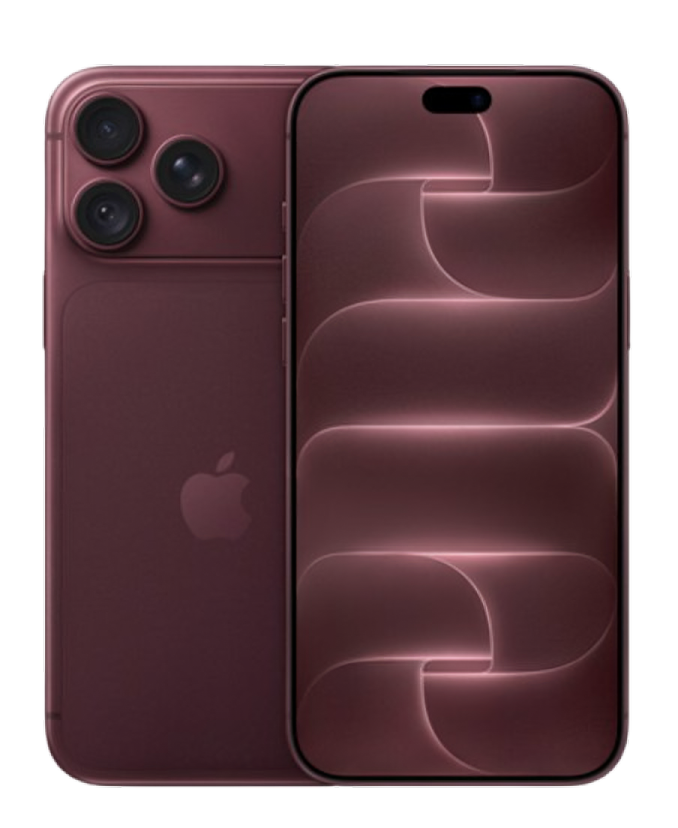
Aerospace-grade aluminum frame paired with an upgraded color-infused back glass panel. The front features the latest-generation Ceramic Shield, which Apple claims offers 50% greater structural resilience than the initial formulation.
Measuring 147.6 × 71.6 × 7.8 mm and weighing 170 g, the device offers top-tier one-handed ergonomics. The mass distribution is centered low, preventing top-heavy slippage.
Two major structural shifts occur along the perimeter: the customizable Action Button supplants the legacy mute switch on the left rail, while the flush, capacitive-and-force-sensing Camera Control sapphire glass interface sits on the lower right rail.
Reverting to a vertical pill camera bump reduces the module footprint, though off-center tapping while flat on a desk still introduces minor wobble. It carries an IP68 certification under IEC standard 60529 (maximum depth of 6 meters up to 30 minutes).
Display Real-World Assessment
Panel Technology & Resolution: 6.1-inch Super Retina XDR OLED with a resolution of 2556 × 1179 pixels at 460 ppi.
Typical brightness reaches 1,000 nits, with High Brightness Mode (HBM) peaking at 2,000 nits under direct sunlight. Nighttime reading allows a floor drop down to 1 nit.
Delivers broad DCI-P3 gamut coverage and deltaE values below 1.2 in natural sRGB profiles, retaining accurate color reproduction across brightness steps.
The display continues to lack LTPO backplane technology and ProMotion. It remains locked to a standard 60 Hz fixed refresh rate. In an era where sub-$400 devices feature variable 120 Hz panels, this omission manifests in visible frame jitter during fast scrolling and systemic UI navigation.
Performance, Sustained Load, and Software Apple A18 So
Built on TSMC's second-generation 3nm node (N3E). Configured with a 6-core CPU (2 performance and 4 efficiency cores), a 5-core GPU with desktop-class hardware-accelerated ray tracing, and a 16-core Neural Engine boasting up to 35 TOPS.
Upgraded across all storage tiers to 8 GB of LPDDR5X RAM (up from 6 GB on iPhone 15), explicitly required to execute Apple Intelligence on-device models. Background retention is markedly improved, rarely dumping heavy apps.
Apple redesigned the internal substrate using a recycled aluminum thermal substructure. In 20-minute 3DMark Wild Life Extreme stress loops, the A18 sustains approximately 76–80% of its peak score—a noticeable leap over the iPhone 15, which frequently throttled below 68% due to localized hotspots.
Ships with iOS 18. Apple maintains an unwritten standard of 5 to 7 years of full operating system updates and security patches.
Camera Performance Deep Dive
Primary Sensor (48 MP Fusion): 26 mm equivalent, f/1.6 aperture, featuring sensor-shift optical image stabilization and 100% Focus Pixels. Default binning yields sharp, artifact-free 24 MP standard stills, with an in-sensor 2x crop delivering functional 12 MP optical-quality shots. Dynamic range is expansive, minimizing shadow clipping under high-contrast midday sun.
Secondary Sensor (12 MP Ultrawide): 13 mm equivalent, f/2.2 aperture with a 120-degree field of view. The wider aperture (up from f/2.4) yields noticeably cleaner low-light shadow detail. Crucially, phase-detection autofocus is now integrated, enabling dedicated Macro photography on the baseline tier for the first time.
Lacks a dedicated optical telephoto module; framing beyond 2x relies entirely on algorithmic digital crop, showing detail breakdown beyond 5x.
4K recording up to 60 fps in Dolby Vision HDR, alongside Spatial Video capture for playback on Apple Vision Pro. The newly introduced Audio Mix feature leverages multi-mic computational beamforming, isolating "In-Frame," "Studio," or "Cinematic" vocal tracks effectively.
Front True
12 MP, f/1.9 aperture with autofocus, maintaining consistent skin tones and clean edge separation in portrait mode.
Battery Endurance & Charging Realities
Endurance: Housing an estimated ~3,561 mAh cell, the increased efficiency of the N3E A18 platform paired with display improvements provides 7.5 to 8.5 hours of mixed screen-on time (web browsing, camera bursts, video streaming, and Slack messaging), comfortably lasting a full 16-hour working day.
Wired Charging Metrics (Using 30W+ USB-PD Adapter):
15 Minutes: Reaches 32%
30 Minutes: Reaches 58%
0 to 100% Full Charge: 1 hour 38 minutes (aggressive thermal trickle-charging above 80%).
MagSafe and Qi2 charging now support up to 25W peak when connected to a 30W adapter, filling the cell to 50% in roughly 30 minutes. Reverse wired charging outputs at 4.5W for AirPods or Apple Watch.
What We Liked (Pros)
- • Class-Leading A18 Processing: Industry-topping single-core performance, capable desktop-grade ray tracing, and 8 GB RAM headroom for future-proof on-device machine learning.
- • Upgraded Dual Camera Rig: Inclusion of autofocus on the f/2.2 ultrawide unlocks macro photography alongside crisp 24 MP default fusion stills and Spatial Video.
- • Improved Thermal Architecture: Substantially mitigated thermal throttling under prolonged gaming and compute loads compared to previous iterations.
- • Ergonomic Control Expansion: Physical Action Button and dedicated multi-gesture Camera Control streamline tactile shooting and custom automation.
- • Audio Mix Studio Processing: Studio-grade computational voice isolation that significantly reduces ambient noise in outdoor video recording.
Room for Improvement (Cons)
- • Unacceptable 60 Hz Refresh Rate: Fluidity suffers noticeably against every Android peer in the $800 price bracket featuring 120 Hz displays.
- • Throttled USB 2.0 Interface: The USB-C port remains artificially limited to legacy 480 Mbps data transmission speeds.
- • No Dedicated Telephoto Lens: Optical reach remains capped at 2x crop; zoom captures past 3x exhibit noticeable noise and digital smoothing.
- • Sluggish Sub-30W Peak Wired Charging: Full top-up requires over 90 minutes due to conservative voltage curves beyond 80%.
Final Editorial Rating
Our comprehensive hardware score considering design, display, cameras, and performance.
The iPhone 16 is an exceptionally polished, reliable purchase for everyday users upgrading from an iPhone 13 or older who prioritize battery longevity, elite video capture, and high-performance silicon that will last half a decade. Enthusiasts and competitive mobile gamers seeking fluid 120 Hz scrolling, dedicated 3x/5x optical zoom, or fast external file transfers should look past the base model and either step up to the iPhone 16 Pro or pivot to the Samsung Galaxy S24.