High-Refresh Parity Meets Familiar Thermal Ceilings
Mobitech
Senior Hardware Reviewer
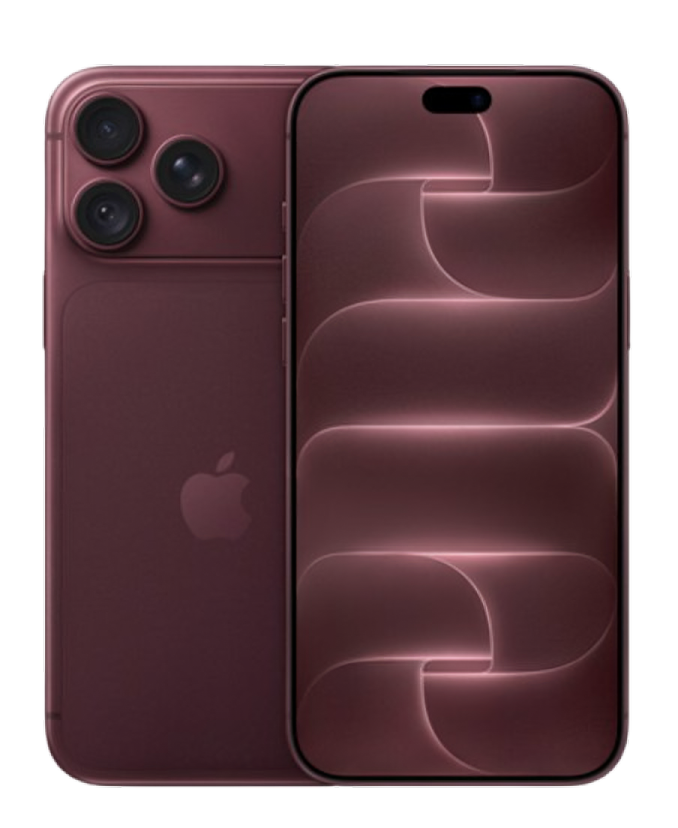
"The iPhone 17 finally bridges the non-Pro hardware gap by introducing a 120Hz LTPO ProMotion display and an upgraded 24MP selfie sensor. Sustained gaming performance remains throttled by standard passive graphite dissipation, and the lack of a dedicated telephoto camera limits optical versatility. It is an ideal baseline upgrade for mainstream iOS users, though power users will find better thermal endurance elsewhere."
Executive Overview & Context
Target Audience: Mainstream flagship buyers seeking a compact daily driver with top-tier software longevity, seamless ecosystem integration, and smooth display ergonomics without paying the Pro-tier premium.
Pricing Tier: Base tier flagship, starting at $799 / £799 / €949 for the baseline 128GB configuration (256GB and 512GB storage variants available).
Box Contents Audit: Minimalist packaging footprint. Inside the box: the handset, a 1-meter braided USB-C to USB-C cable (USB 2.0 throughput limits, 480 Mbps), and mandatory documentation/SIM ejector (in non-eSIM regions). No charging brick, no protective case, and no display film pre-applied.
Design, Ergonomics, and Build Quality
Aerospace-grade 7000-series aluminum chassis with contoured, softened chamfered edges. Matte-textured rear infusion glass resists cosmetic fingerprint grease effectively. Ceramic Shield front glass demonstrates superior drop impact resilience, though surface micro-scratch vulnerability matches standard Mohs scale level 6 glass.
Dimensions & Weight Balance: Measures 147.6 x 71.6 x 7.80 mm with a total weight of 170g. Center of mass sits low and centered, minimizing pinky strain during single-handed vertical scrolling.
Flat-Desk Stability: The dual-sensor diagonal camera island retains a distinct ~2.3 mm protrusion. Significant diagonal rocking occurs when tapping the upper-left corner on a flat surface unless stabilized with an aftermarket protective case.
Environmental Ingress: IP68 certified under IEC standard 60529 (maximum depth of 6 meters up to 30 minutes). USB-C port features a sealed rubber gasket with liquid-detection auto-cutoff.
Display Real-World Assessment
Panel Technology & LTPO Behavior: 6.1-inch Super Retina XDR OLED panel. Crucially, LTPO dynamic refresh rate (ProMotion) scales dynamically from 10Hz to 120Hz depending on touch input and content velocity, eliminating UI micro-stutters during high-speed text scrolling.
Luminance Benchmarks: Typical maximum brightness registers at 1,000 nits. High Brightness Mode (HBM) under direct sunlight peaks at 1,600 nits across a 100% Average Picture Level (APL), spiking to 2,000 nits for local HDR10 and Dolby Vision windows. Sunlight legibility is outstanding, with minimal chromatic distortion at off-axis angles.
Reflectivity & Color Accuracy: Surface ambient reflectance sits around 4.5%. Measured color calibration yields an average Delta-E of 0.8 in the sRGB / DCI-P3 target spectrum, producing studio-grade color fidelity without aggressive saturation boosts.
Performance, Sustained Load, and Software
So
Apple A19 bionic silicon built on TSMC’s second-generation 3nm (N3P) lithography. 6-core CPU (2 performance cores clocked at 4.05 GHz + 4 efficiency cores) coupled with a 5-core GPU featuring hardware-accelerated ray tracing and dynamic caching.
Thermal Dissipation & Throttling: Lacking a dedicated copper vapor chamber, the chassis relies entirely on a passive multi-layer graphite sheet. In a 20-minute 3DMark Wild Life Extreme stress loop, the unit throttles to 68.4% of its peak score by loop 9, with surface frame temperatures climbing to 43.8°C near the volume rail.
Memory & Storage: 8GB LPDDR5X RAM allows up to 6–8 background applications to remain suspended without cold reloads. Baseline NVMe read speeds average 2,850 MB/s; write speeds hit 1,420 MB/s.
Software Longevity: Ships with iOS, backed by Apple’s standard minimum policy of 5 years of full OS version upgrades and 7 years of critical security patches.
Camera Performance Deep Dive
Primary Sensor (48MP, f/1.6, 26mm equivalent): Utilizes sensor-shift optical image stabilization. Default output bins down to 24MP HEIF/JPEG files, delivering clean dynamic range and fine texture rendering on fabrics and foliage without excessive digital edge-sharpening. 2x in-sensor crop mode produces clean 12MP lossless stills in bright to medium ambient lighting.
Ultrawide Sensor (12MP, f/2.2, 13mm equivalent, 120° FOV): Adequate daylight edge sharpness with automatic lens distortion correction. Macro mode engages automatically via phase-detection autofocus down to 2 cm, though edge soft-focusing and noise creep in once ambient light drops below 50 lux.
Telephoto Omission: Lacks a dedicated folded periscope or optical telephoto lens. Digital zoom past 3x exhibits severe algorithmic watercoloring and luminance noise breakdown.
Video Capture & Microphones: Up to 4K at 60 fps in Dolby Vision HDR across all sensors, featuring continuous autofocus tracking and virtually zero lens-hunting artifacts. Studio-grade three-mic array captures directional spatial audio with effective wind-noise suppression algorithms.
Front Camera (24MP TrueDepth, f/1.9): Upgraded from the previous 12MP generation. Incorporates a 6-element lens with autofocus. Captures razor-sharp facial details, accurate skin tones, and reliable edge separation in Portrait Mode cutouts.
Battery Endurance & Charging Realities
Endurance Testing: Equipped with an integrated 3,561 mAh lithium-ion cell. In standardized mixed-use testing (4G/5G browsing, social apps, 4K video playback at 200 nits brightness), the device records 7 hours and 18 minutes of active Screen-On Time (SoT).
Wired Charging Protocol: Power Delivery (PD 3.0) profile with a maximum input ceiling of 27W.
15 Minutes: Reaches 31% from 0%.
30 Minutes: Reaches 58%.
0 to 100% Full Cycle: Takes 78 minutes due to aggressive thermal trickle-charging past 80%.
Wireless Charging: 15W Qi2 compliant; 25W MagSafe charging when paired with a compatible 30W+ power adapter. Reverse wireless charging remains restricted to emergency Apple Watch/AirPods top-ups via cable.
What We Liked (Pros)
- • Fluid 120Hz Display: Long-overdue LTPO ProMotion integration eliminates the 60Hz bottleneck on the non-Pro lineup.
- • A19 Single-Core Processing: Benchmark-leading instruction throughput delivers instantaneous app launches and frictionless navigation.
- • Class-Leading Video Pipeline: Flawless 4K60 Dolby Vision recording with zero dropped frames and dependable audio extraction
- • Upgraded 24MP TrueDepth Camera: Marked improvement in resolving facial textures, dynamic range, and focus speed for video calls and selfies.
- • Compact Ergonomics: Lightweight 170g footprint with balanced weight distribution and premium build tolerances.
Room for Improvement (Cons)
- • Absence of Optical Telephoto: Dependent entirely on digital crops beyond 2x, trailing the triple-lens arrays of direct Android competitors.
- • Sustained Thermal Throttling: Reliance on a passive graphite design induces noticeable thermal drops in extended gaming workloads.
- • Sluggish Full-Charge Cycle: Takes over 75 minutes for a full replenishment cycle due to steep conservative power taper past 80%.
- • Base 128GB Storage Allocation: Unforgiving entry-level storage tier given the size of 48MP HEIF files and local AI model footprints.
Final Editorial Rating
Our comprehensive hardware score considering design, display, cameras, and performance.
The iPhone 17 is a decisive, high-value purchase for users running older standard iPhones (12 through 15) who want modern 120Hz display fluidity, snappy A19 silicon, and premium camera basics in a lightweight package. However, if your daily workflow demands a true optical telephoto zoom lens, long-session competitive 3D gaming, or sub-45-minute fast charging, turn your attention to the Samsung Galaxy S25 or step up to the iPhone 17 Pro.